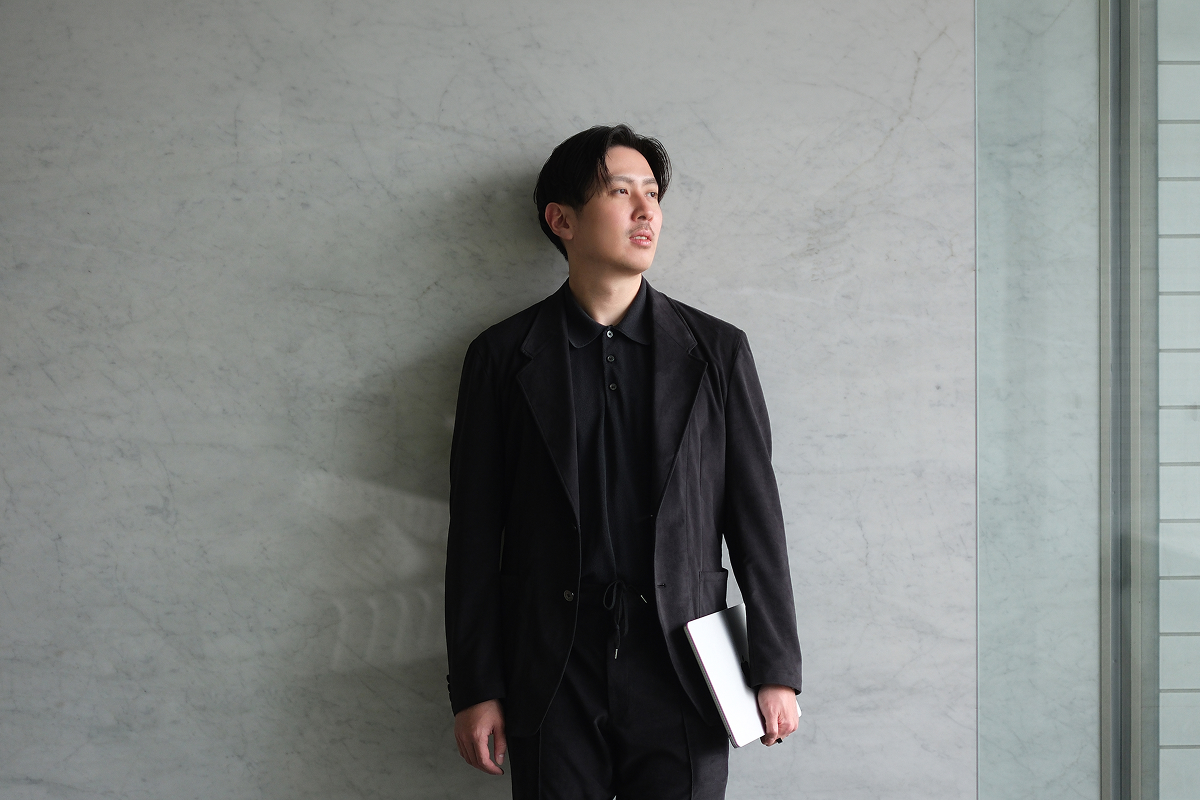
CEO Wei-Han Wang shares the journey so far and his vision for the future as the "soul" of the company.

Q1: How do we deliver value that exists but isn't reaching its audience?
If I had to sum up my career before TAIMATSU in one phrase, it would be that I have always been dedicated to transforming things that possess inherent value but aren't reaching their potential into a form that does. While Japan boasts world-class technology and aesthetics, these often remain trapped within the insular logic of their production regions, failing to integrate into global market, brand, and distribution strategies. I gravitated toward traditional crafts not just out of romanticism, but because I was convinced of the massive untapped business potential. Japanese traditional techniques are fundamentally strong. However, the circuits that convert that strength into value are weak. If we rebuild those circuits, we can win on the global stage with Japanese-made products. TAIMATSU is a company built to implement those circuits as an industry.
Q2: Where technical brilliance met business fragility
When I first dove deep into the world of traditional crafts, what hit me wasn't an ideal or a sense of wonder, but a profound sense of dissonance. The biggest shock was seeing technical brilliance and business fragility coexisting in the same space. Miraculous quality was being produced, yet it wasn't translating into a sustainable livelihood for the artisans or a future for the region. It wasn't a lack of demand; it was a failure of delivery. The pricing, the sales channels, and the way the story was told were all out of sync with modern market structures. The sense of crisis was simple: the realization that if things continued this way, these crafts would disappear. This isn't a problem that one person can solve through sheer effort; it is a structural issue. That is why TAIMATSU was founded not just to sell good products, but to build a market where artisan craftsmanship can thrive sustainably. This is our starting point.

Q3: Winning through structure, not sentiment
The reason we can win isn't based on sentiment. It’s because we see a clear path to victory through structure. TAIMATSU has three primary weapons.
1. Access to the authentic and deep connection to the field. Traditional crafts are a sector that seems accessible but is actually difficult to enter. Quality is determined by processes and relationships. TAIMATSU embeds itself deep within the artisan world, allowing us to touch the very core of production.
2. Design capability across brand, retail, and global markets
Through MUSASHI JAPAN, we operate physical stores in Kyoto, Tokyo, and Nara, allowing us to capture customer reactions in real-time, refine the experience, and iterate on improvements. Furthermore, we are seriously pursuing expansion into the US and France. The major difference is that we have designed our business from the start with the premise of winning by global market rules.
3. Editorial power to turn tradition into products
In traditional crafts, simply making something good isn't enough to convey its value. It requires a story, a purpose, an experience, clear articulation, and education. It only becomes true value when it includes how it is used. TAIMATSU can translate artisan techniques into value that global users can understand. This editorial capability is what sets us apart. In short, it’s not just about being able to make things or sell things. It’s about possessing the power to create and the power to deliver simultaneously. That is the logic behind TAIMATSU’s winning strategy.
Q4: From preserving technology to evolving it
So, what kind of future do we want to realize after rebuilding this structure? TAIMATSU is not aiming for mere survival; we are aiming for the next phase. In five years, I want to create a state where a business model that allows artisan techniques to be passed down to the next generation is replicable across multiple regions. A state where artisan income is stable, apprentices are joining, capital investment is flowing, and quality continues to rise. In other words, we will have entered a phase where technology is not just being preserved, but is evolving. The vision for ten years from now is even clearer: a world where Japanese traditional industries are not just tourist souvenirs, but a serious choice for consumers worldwide. By then, TAIMATSU should be more than just a single-brand company; it should be a platform that enables Japanese traditional techniques to thrive in the global market. Ultimately, there is one landscape I want to change: moving from "amazing technology that struggles" to "amazing technology that is powerful." By existing, TAIMATSU will make that future the norm, not the exception.


Contact Us

